The American Edge: Local roots, lasting impact
TAKING ON TARIFFS: NUMBERS TO KNOW
Gift Shop® Plus surveyed U.S. retailers in late spring to learn how they are adjusting to the new economic climate, with more than 200 retailers responding. Here we present a snapshot of how the potential of tariffs is hitting the gift and specialty retail industry. To access our full report and findings, go to giftshopmag.com/talkingtariffs.
As tariff tensions escalate and global supply chains feel unpredictable, some retailers are seeking the stability and certainty that American-made products provide.
Three made-in-the-USA wholesalers — spanning categories such as home décor, toys, and beauty and self-care — share their philosophies, manufacturing processes, advantages and common misconceptions when it comes to U.S.-based manufacturing.
ORIGINS AND PHILOSOPHIES
For toy company Wikki Stix, president Kem Clark has stayed true to her company’s American roots from day one. After purchasing the patent for Wikki Stix — colorful, bendable and unbreakable fidget sticks that adhere without glue and don’t leave residue — Clark began manufacturing in the U.S. and never looked back.
“The moment that I bought the patent from the gentleman who invented it, he was in Chicago, and literally, his facility was right directly across the service road at Wrigley Field. You can’t get much more all-American than that,” Clark laughed.

From there, she began manufacturing on-site at the Phoenix-based Wikki Stix headquarters.
“It never dawned on me to do anything other than make it right here in the U.S. That’s just what I was going to do,” she said. “We’re going to make a product, and we’re going to make it right here.”
Ryan Martz of Fire & Pine echoed that sentiment, sharing that his company — which creates engraved wood maps, custom wall art, charcuterie boards, ornaments and more — has always been committed to domestic production.
“We’ve always been made in America for years and years, and the reason we decided to do that is because with our particular product line, we’ve got so many different designs and SKUs. We’ve got over half-a- million SKUs,” Martz said. “So it was never an option to not be, because everything’s made to order.”
Similarly, Farmhouse Fresh, a women-owned organic skincare company, was founded in 2005 on several missions.

“Since 2005, FarmHouse Fresh has been a pioneer in farm-grown, cruelty-free, made in the USA bath, body and skincare with transformative results while maintaining a mission to rescue animals in need,” said Delia McLinden, co-founder and vice president of sales at Farmhouse Fresh. “Every product purchase directly supports their nonprofit animal sanctuary where horses, donkeys, goats and sheep coming from situations of cruelty and neglect find a forever home. Customers can track the product batch code on their jar to learn the stories of the animals directly impacted, and who they’ve helped to save with their purchase.”
The company manufactures 100% of its products in the U.S., with 98% of its manufacturing taking place in Texas. In fact, it grows its microgreens at its farm in McKinney, Texas, which are harvested and turned into botanical extracts.
“Our other natural and organic core ingredients — things like cucumber, pumpkin, berries and botanical milks — are grown and sourced within the United States,” McLinden said. “We’ve spent more than two decades prioritizing U.S.-grown ingredients and domestic suppliers.”
ADVANTAGES GALORE
There are plenty of logistical advantages to manufacturing stateside, including flexibility, control and an added layer of stability among economic concerns such as tariffs.

Clark emphasized quality assurance and rapid order fulfillment as a major benefit of partnering with Wikki Stix.
“We know we can trust the product we deliver. We know it’s manufactured in a safe environment and a clean environment,” she said. “Timing is also not an issue. We can ship orders immediately, and even if somebody needs a custom order, we’re able to turn on a dime and generate that right here as well. So our quality control is literally right here, where we have our hands on it all the time and can see what’s going on constantly.”
Martz cited increased flexibility as another asset that made-in-the-USA brands provide, saying his “creative, well-oiled” production team has found Fire & Pine a “sweet spot” in the market.
“The ability to pivot quickly, to provide something for our customers that meets the moment, is by far the biggest advantage by far,” he said. “You just don’t know what’s going to happen in the economy — if we drop into recession, if we start having stagflation, customers are going to need a different good at a different price point, and being able to pivot quickly to meet that need is really what’s going to rise a lot of brands that are able to pull that off right to the top of their list.”

For example, Fire & Pine has just debuted Micro Maps — low-cost, high-margin product — to some customers and have received positive feedback regarding the quick turnaround and pivots made by the company to keep retailers’ shelves stocked with affordable items.
“We need to be able to get it out there quickly with as little red tape, i.e., sourcing, as possible, and just get stuff into people’s hands,” Martz said. “It’s going to be weird to see how it plays out because for the next three months; there may be huge empty shelves, because everybody paused their shipments. And then there are gonna be full shelves for Christmas, but they’re gonna be expensive.”
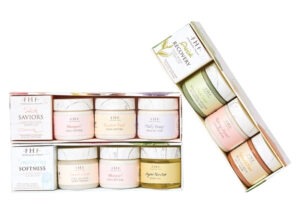
Meanwhile, while Farmhouse Fresh notes the supply-chain resistance as a benefit, it does even more for the company — it strengthens product quality and potency building community.
“Whenever possible, we would rather support other local businesses by sourcing from them. By doing so, we’re strengthening our own communities,” McLinden said. “In addition, our just-harvested botanicals are bursting with high nutrition for your skin. Grown fresh daily, these tiny microgreens are more nutrient dense than many full-sized vegetables. Their extracts bring rapid results in our skincare, so you see nothing but a glowing, gorgeous complexion. Our fresh grown daily approach is the complete opposite of ingredients and brands that source and manufacture overseas, which can result in ingredients and products sitting on a dock or in a warehouse for months.”
CLEARING UP MISCONCEPTIONS
A common misconception is that made-in-the-USA products are more expensive. Clark explained that it isn’t always the case.
“We happen to be a relatively simply made product, so we’re able to keep costs down,” she said. “People are thinking, ‘Oh, they’re paying American salaries, and they’ve got American employees and, oh my gosh, I can’t afford a product that’s made here.’ And that is certainly not the case in our instance.”

Fire & Pine.
Even further, McLinden emphasized a growing number of consumers who are going out of their way to seek domestically manufactured products.
“Studies in recent years show that consumers would prefer to buy American-made goods if given the choice, and this trend continues to grow. … Products made overseas may not have the quality or longevity, so you’re spending more to replace them, more quickly,” she said.
Meanwhile, Martz highlighted the spectrum of what “made in the U.S.” can imply. While his company manufactures all its products domestically, raw materials like lumber come from overseas to the company’s U.S.-based warehouse. He noted that while some companies do make their products domestically, it is rare to find that every screw, hanger, nut and bolt is American-made, so it’s important for customers to understand that even made-in-the-USA companies may be affected by tariffs — even if in small amounts.
“By being able to have a global supply chain for even small ancillary parts, it allows your products to be cheaper and a better investment for consumers, it’s a more consumable product, and it’s a win-win for everybody across the board,” Martz explained. “But the biggest misconception is that if the products are made in America, they’re not affected by tariffs, because it is — no matter what it is, and it might be a small amount. For us, it was a small factor in our overall big picture.”
IN CONCLUSION
Ultimately, despite nuances and complexities, local production offers stability during an otherwise uncertain period. All three wholesalers see their products being made — from start to finish — right in their own facilities, strengthening trust with retailers and consumers alike.
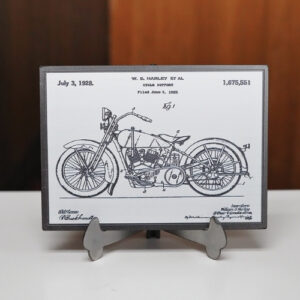
Martz assured that Fire & Pine will be empathetic and continue to value its retailer-wholesaler relationship, despite any potential economic headwinds on the horizon. “We want our customers to be as healthy and vibrant as possible. … Sales will come from that naturally,” he said.
Clark emphasized Wikki Stix’s safety and economic values it has established as a brand.
“We are regulated very, very heavily by all of the American child safety protection requirements. We get tested regularly,” she said. “I’m not sure if everything else coming in from offshore meets all of those standards, but you have to know immediately that we do, because we manufacture here and we conform to the tests constantly, and we’re also providing American jobs.”