The Big Easy’s Sweet Tooth
Aunt Sally's Original Creole Pralines
Founded: 1910s
In current location since: 1940s
Headquarters/Store Location: New Orleans, LA
Phone: 504.524.3373
Web: AuntSallys.com
Advice for retailers:
There's not much to it. It's just having a good product, really good promotions and a good, customer-oriented staff.
Aunt Sally’s Original Creole Pralines found its beginnings as a small store in New Orleans’ French Quarter in the early 1900s. Founded by Creoles Pierre Bagur and Diane Jacquet, the store stocked sandwiches, magazines and character dolls reflective of Louisiana culture. In 1910, their homemade pralines—which would soon represent the bulk of the company’s business—made their first appearance at Aunt Sally’s Royal Street shop.
In the early 1940s the business moved into its current location, in the French Market beside world-famous Cafe du Monde, which has been serving beignets and cafe au lait since 1863. Aunt Sally’s has blossomed into a French Quarter mainstay that attracts visitors with the sweet aroma of freshly baked pralines and the sounds of jazz and zydeco. Over the years, the store—which is run as a small, family business—has managed to land numerous national accounts, including the Disney Company, and its booming mail-order business has Aunt Sally’s pralines and gift baskets shipping around the world.
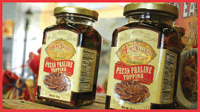
A sweet, cookie-shaped candy, pralines are made with sugar, syrup and pecans; they have historically been a New Orleans culinary delight. Aunt Sally’s makes a number of pralines, including Original Creamy Pralines, Triple Chocolate Creamy Pralines, Bananas Foster Creamy Pralines and Cafe Au Lait Creamy Pralines. Visitors are welcomed to the Decatur Street store with samples and a window that offers a peek into a kitchen where the tasty treats are made.
“We make our pralines with pure Louisiana products: Louisiana sugarcane, cream, butter, pecans and vanilla,” says retail store manager and wholesale representative Becky Hebert. “It’s all cooked in the original copper pots that were developed by the company in the early days. It’s all cooked on an open flame by hand.”
Other sweet and tasty Aunt Sally’s products include flavored pecans, pecan log rolls and pecan syrup. The Decatur Street store also stocks a variety of Louisiana spices and seasonings, cookbooks, Mardi Gras souvenirs, kitchen accessories and CDs of Louisiana music. The gift sets range in price from $29 to $99 and include a variety of spices, candies and pralines nestled in straw baskets. The Aunt Sally’s Pirogue includes pecan nuts, a pecan nut roll, pecan topping, chocolate candies and six pralines.
In the eye of the storm
Becky Hebert has managed the Decatur Street shop for two years, but nothing could have prepared her for what happened in late August 2005, when Hurricane Katrina washed over the New Orleans area. When the city called for mandatory evacuations on the day before the storm, Hebert closed the shop at 2 p.m. and sent her employees home. Evacuations and hurricane scares are an annual occurrence in New Orleans, but the city hadn’t seen a major hurricane since Betsy in 1965; for all anyone knew, it was just going to be another weekend evacuation.
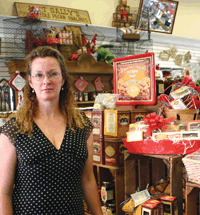 “We have a little hurricane preparedness that we do here, which had we been hit with the water everyone else got, the point would have been moot. We lifted things up and prepared for about a foot of water. We organized and protected our computers,” she says. “Then we just got out.”
When Katrina’s surge caused levees to fail, it inundated the city with water, leaving thousands stranded and more than 1,000 dead. Many areas of the city were without power for months. Even now, thousands of homes lie in ruins and half the city’s population is displaced. While almost 80 percent of New Orleans lay submerged in water for three weeks, much of the French Quarter and Central Business District survived unscathed. The Aunt Sally’s shop suffered minor wind and water damage and lost its perishable foods, but the problems had only begun.
“When we left for Katrina, we had 20 cooks and 15 employees at the store. When we returned in September, we had one cook and no employees,” Hebert says. “We really value our employees. It’s like a big family. Everyone was blown everywhere and there were some people we couldn’t find.”
As information slowly started to trickle in over the course of the next few weeks, Hebert heard tales of Aunt Sally’s employees being pulled from rooftops in neighborhoods that took on 16 feet of water. One employee sprained both ankles when she was rescued from her house. The employee was taken to the Louisiana Superdome, where she was robbed while asleep. Another employee woke up with water slapping her in the face. With people scattered about the country, Hebert and Aunt Sally’s management team found some employees by sifting through resumes and job applications, then tracking down the families.
When they reopened the store in late September, it was staffed by two managers, the CEO, the operations manager and a bookkeeper. The operations manager even helped with the cooking, and all mail orders were processed in the back of the store. To date, the store has only seen three of its 15 original employees return.
“There were a lot of tears in the initial days of opening the doors here,” Hebert says. “We had a lot of locals. They were coming into the city to check on their homes and would come down here for a touch of normality. They would come in here crying each day. It was an emotional roller coaster.”
New challenges emerge
While it has been nearly a year since the storm, staffing remains a major challenge. With the local population cut in half, businesses of all types are having a difficult time attracting unskilled labor. With so few workers in town, wages have skyrocketed. Hebert said that Aunt Sally’s has increased pay to attract hourly employees, but it still can’t attract a full staff. Help-wanted signs hang from almost every business in town, but job applicants are nowhere to be found.
“You’re competing with the likes of McDonald’s now,” Hebert says, referring to the fact that fast-food restaurants have had to almost double their pay to attract workers. “And housing and transportation is a big problem.”
For employees who do want to return, vacant apartments or undamaged houses are hard to find. While the housing situation has slowly been improving in New Orleans, the tight market has caused rental rates to skyrocket. Some renters returned from the storm to find their rents doubled. While its landlord, the French Market Corporation, worked closely with Aunt Sally’s to keep the store in its leased location, Hebert said that a lack of affordable housing is preventing many from returning to the city.
Hebert is running the store with a total staff of five employees. The store remains open seven days a week, but it has cut back its operating hours due to a lack of manpower. “I think it will take years to recover,” Hebert says. “You went from 400,000 to 200,000 people here [in New Orleans], and I just don’t see everyone coming back anytime soon.”
A changing market
 Aunt Sally’s has resumed its healthy mail-order operations with pralines and gift packages, but business has yet to rebound on Decatur Street. According to Hebert, sales are down by as much as 60 percent, largely because tourists have yet to return to New Orleans in their pre-Katrina numbers. In February, Mardi Gras brought a two-week boom, but retailers reported that the economic impact was far from that of previous years.
“I’m still getting calls from people not realizing that they can come down here. They don’t realize that things are OK here in the French Quarter,” Hebert says. “There are also fewer flights and the cruise ships have not come back yet. It’s been a slow, steady buildup.”
In the first few months after the storm, the majority of the people in the French Quarter were relief workers, military personnel and construction workers. There were few tourists on the streets, but many shop owners adjusted their merchandise to cater to the changing market. In the first couple of months, things like work gloves, breathing masks and hot meals were in more demand than pralines, shot glasses and other New Orleans souvenirs. As the dust settled, almost every gift shop in the French Quarter began stocking T-shirts and other souvenirs related to Katrina. But not Aunt Sally’s.
“We’ve been very selective about what we brought in. We’ve always maintained family quality and the character of how it originally started. We don’t carry tacky things,” Hebert says. Aunt Sally’s does stock a few books about the storm—including 1 Dead in the Attic, by New Orleans newspaper columnist Chris Rose—and a photomontage that documents the disaster.
Gift shops and businesses that cater to the tourist crowd have been suffering since the storm from plummeting sales and increased costs. Some store owners in the French Quarter have expressed concerns that it’s only a matter of time before they have to close their doors. Hebert does see hope that things will pick up once large conventions return to the city this summer. Through November, there are more than a half dozen conventions planned with more than 10,000 estimated attendees.
“We held on to Jazz Fest and Mardi Gras, but now we really need the conventions back,” she says. “Talking to other store managers and owners, it sounds like we’re all falling into similar patterns.”